UI/UX Curriculum Development
UX Atlanta
A 12-week, immersive UI/UX program for people entering the UI/UX job market, designed for UX Atlanta’s new educational institution.
The challenge
UI/UX hiring managers were seeing new designers apply without concrete design skills, communication and collaboration skills, or a technical understanding of where UI/UX fits in full-stack development. New designers reported gaps in their training and little support moving from training and internships into full-time work. UX Atlanta’s CEO decided to form an educational institution to address those gaps, paired with the company’s staffing and consulting branches so learners would have support as they became practitioners.
What I made
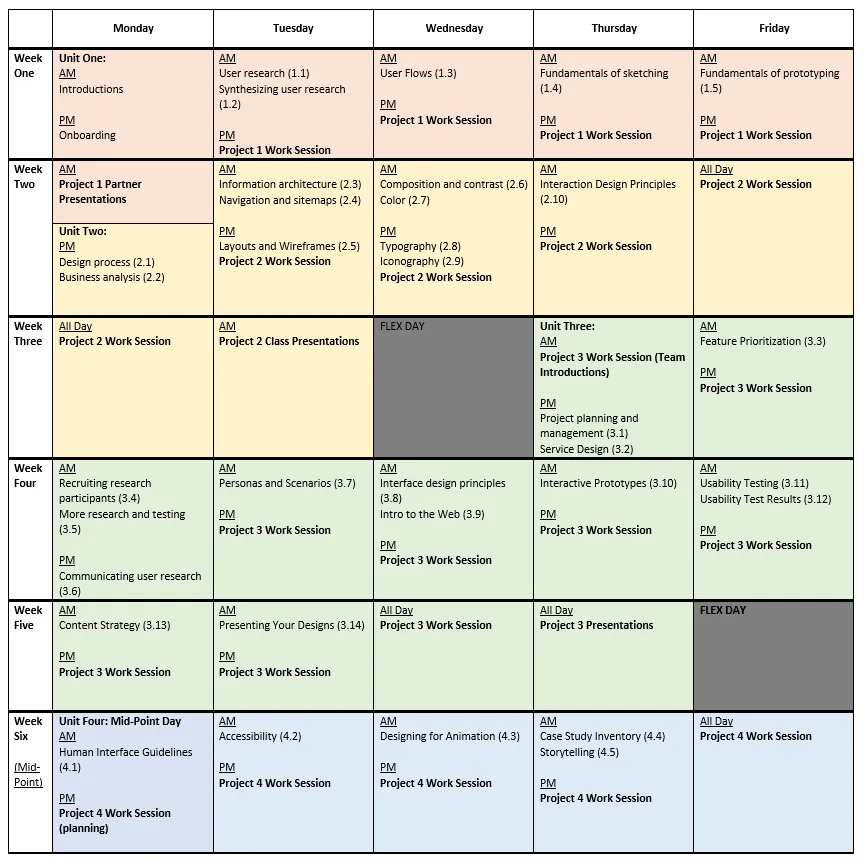
We started with user research, working with hiring managers, UI/UX students, and young professionals to find pain points, and analyzing what and how competitor programs taught. From that data we set outcomes across several competencies and domains. We chose a constructivist approach built on authentic, situated learning tasks; social cognitive theory informed how we taught communication and collaboration, and connectivism shaped the learning tasks and assessments. We then mapped the curriculum, chose the performance tasks, and set the pacing across 12 weeks.
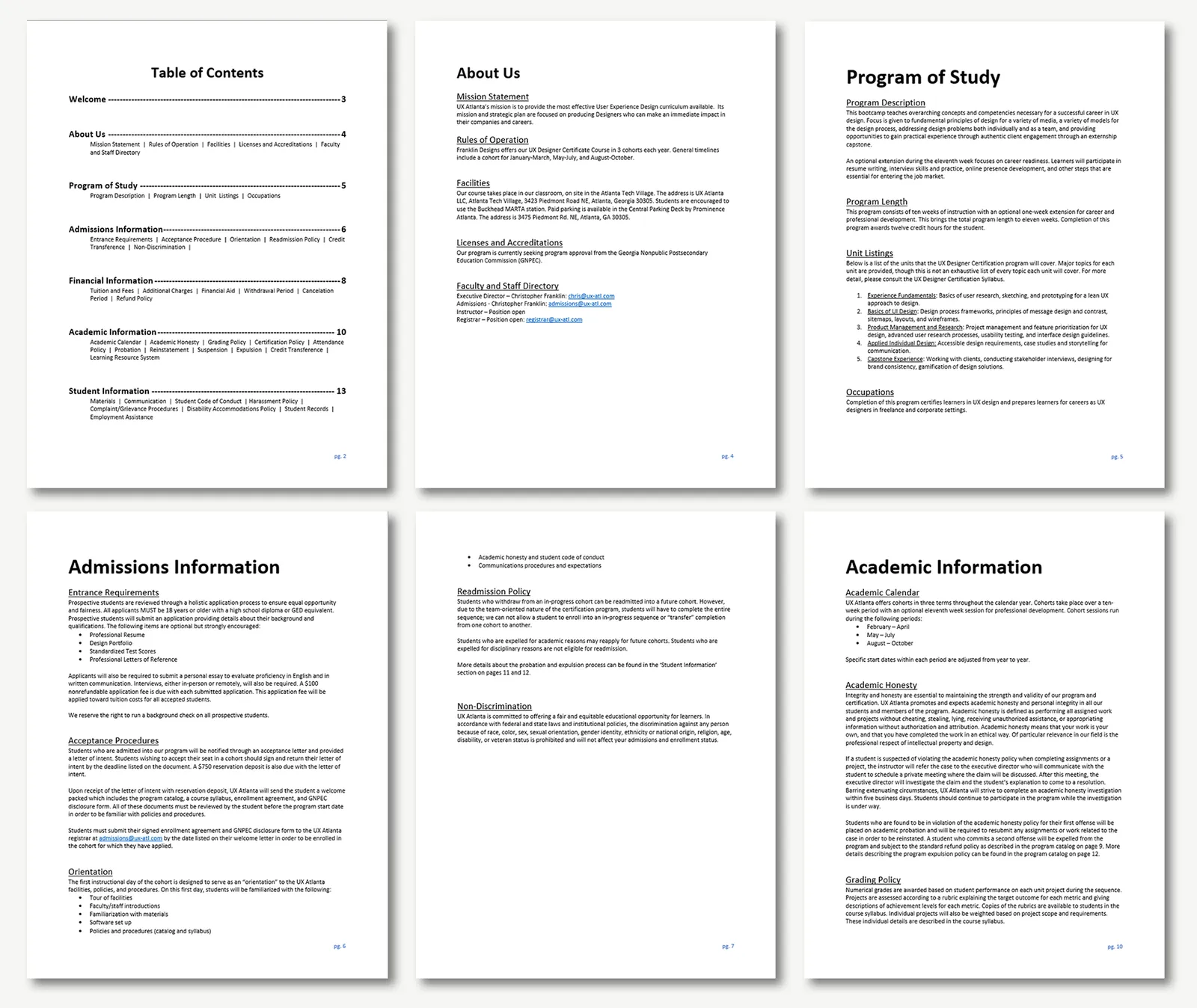
The institution also had to run as a system, so we designed the daily and weekly schedule, wrote its protocols and procedures, and created processes for enrollment and record-keeping. Its policies and procedures are collected in the institution’s catalog and handbook.
Outcome
We used these designs to seek accreditation from the Georgia Nonpublic Postsecondary Education Commission (GNPEC), which we received. It was one of the largest and most complex projects I had worked on. Working alongside UX designers gave me new models for my own design process, including design thinking, personas and user stories, Agile, and the Double Diamond. It also put me in a corporate setting, very different from the K12 and traditional higher education contexts I knew.
Gallery
-
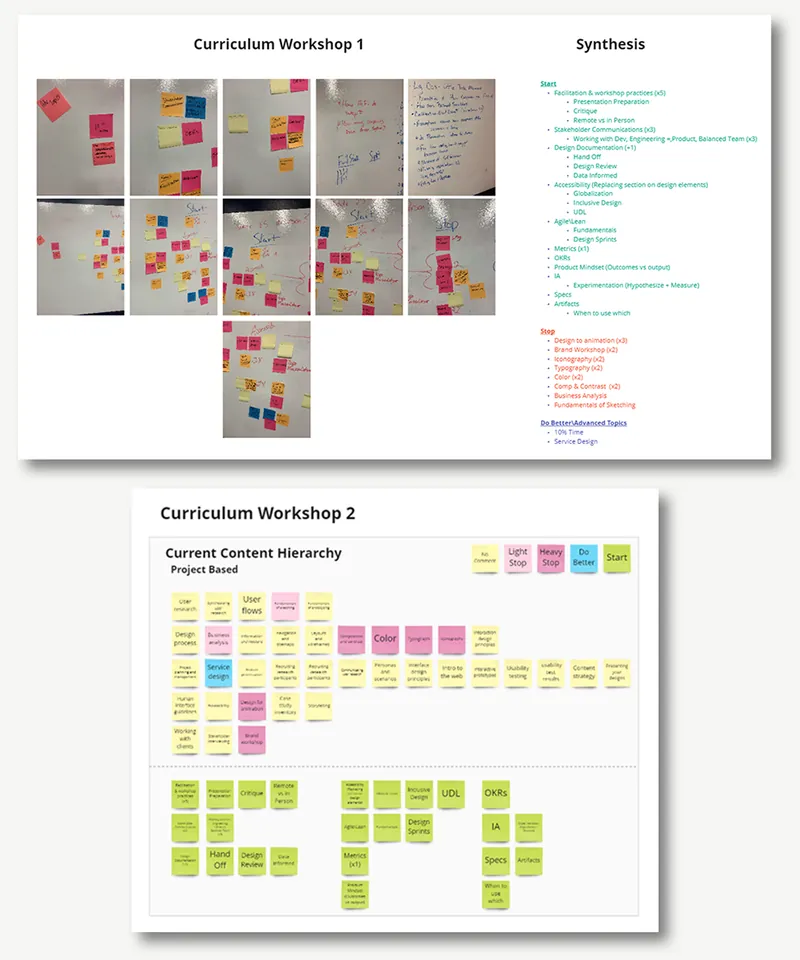
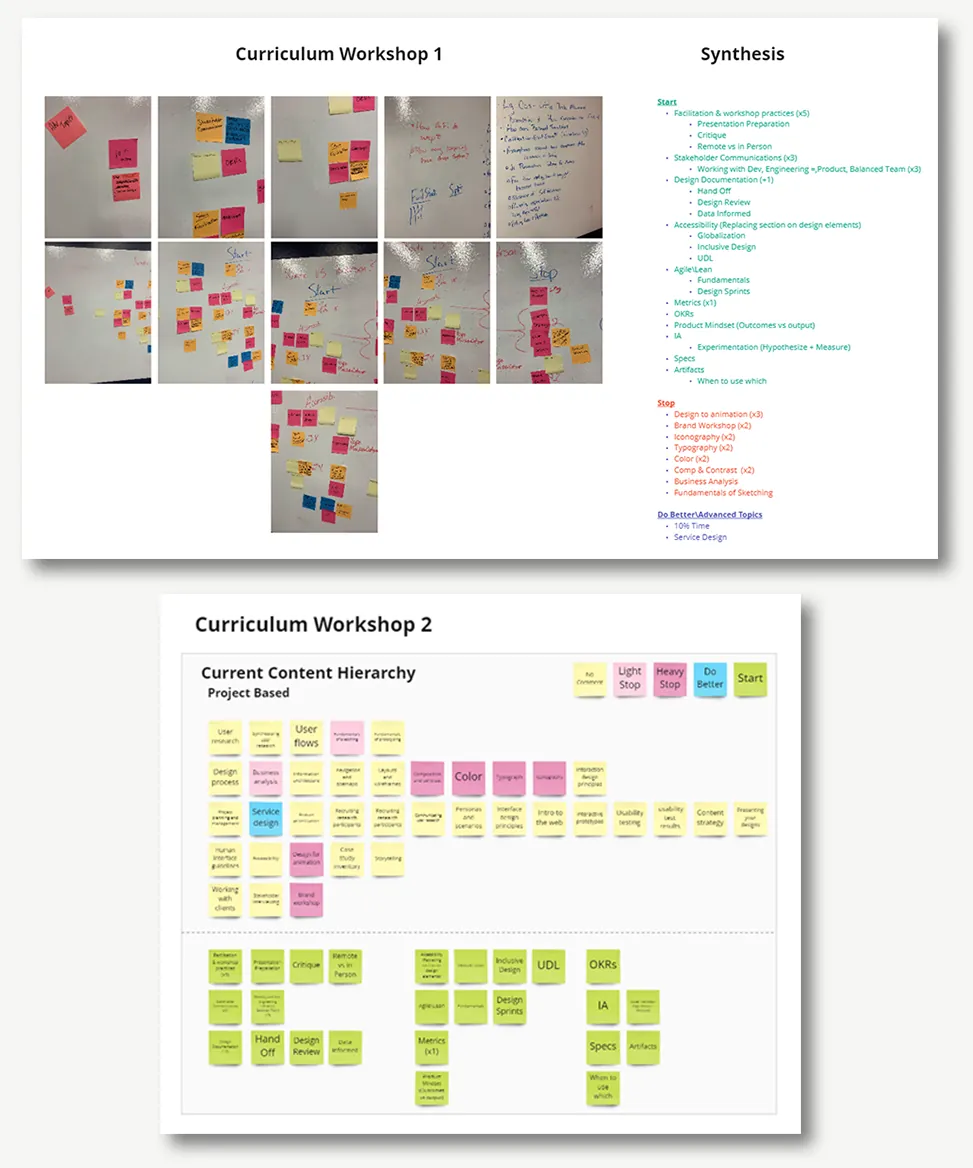
Clips from a Miro board that we used in some of our early curriculum planning meetings -
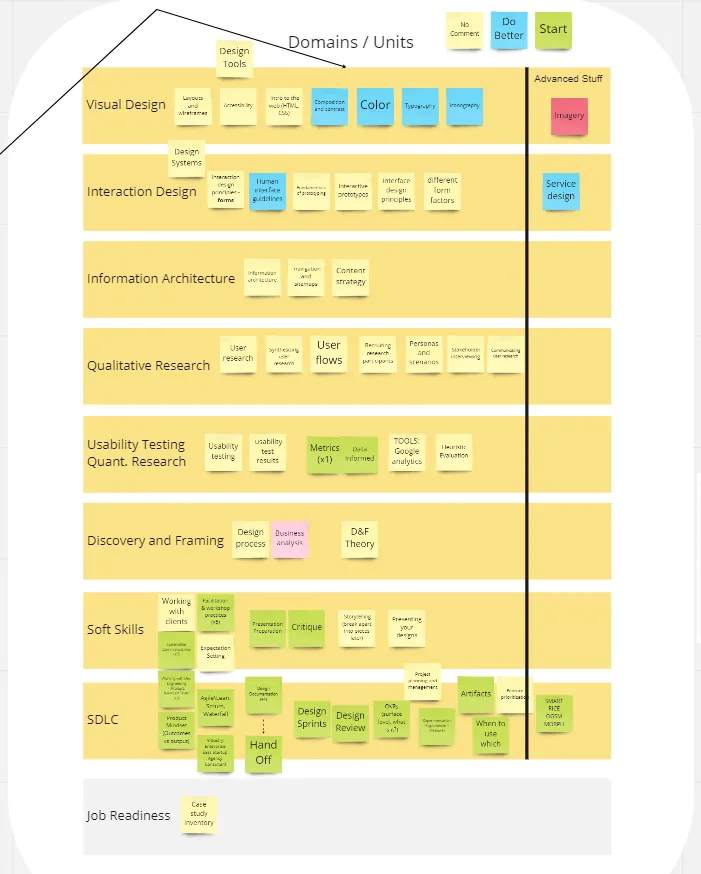
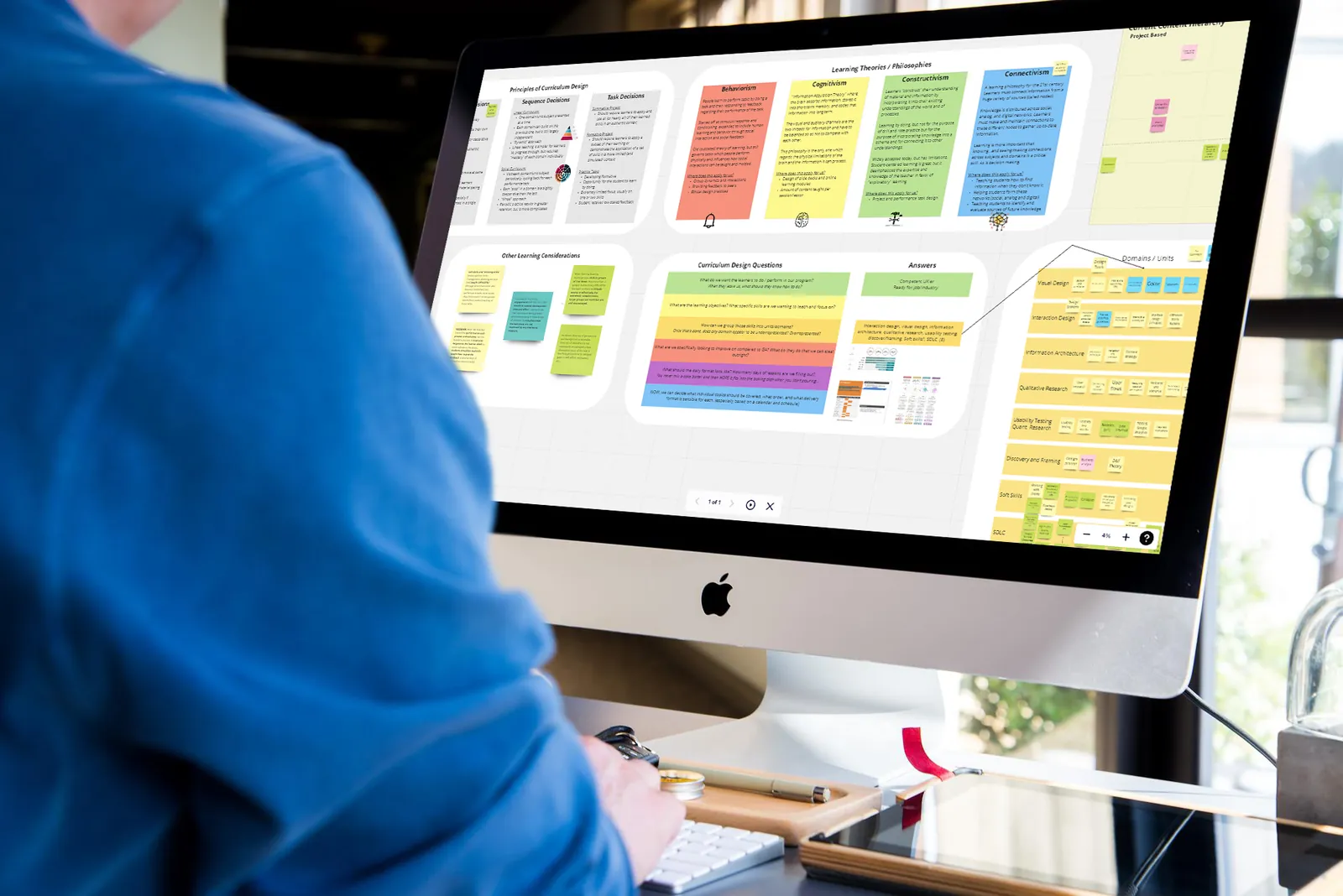
Another clip from a Miro board where we began planning domains and sorting lesson topics -
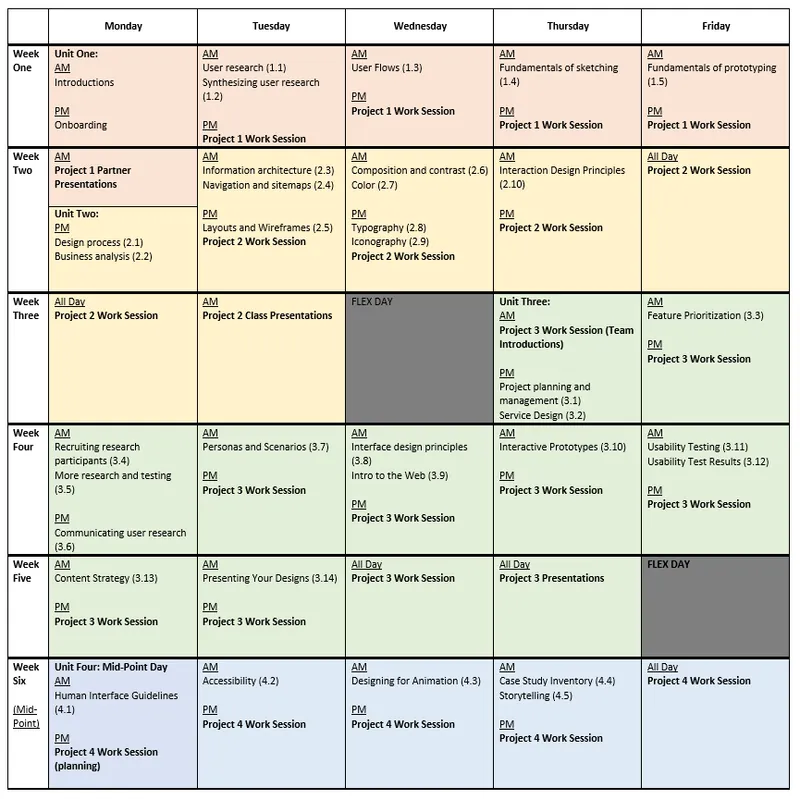
A section of the curriculum calendar, showing our topic and unit pacing over a few weeks -
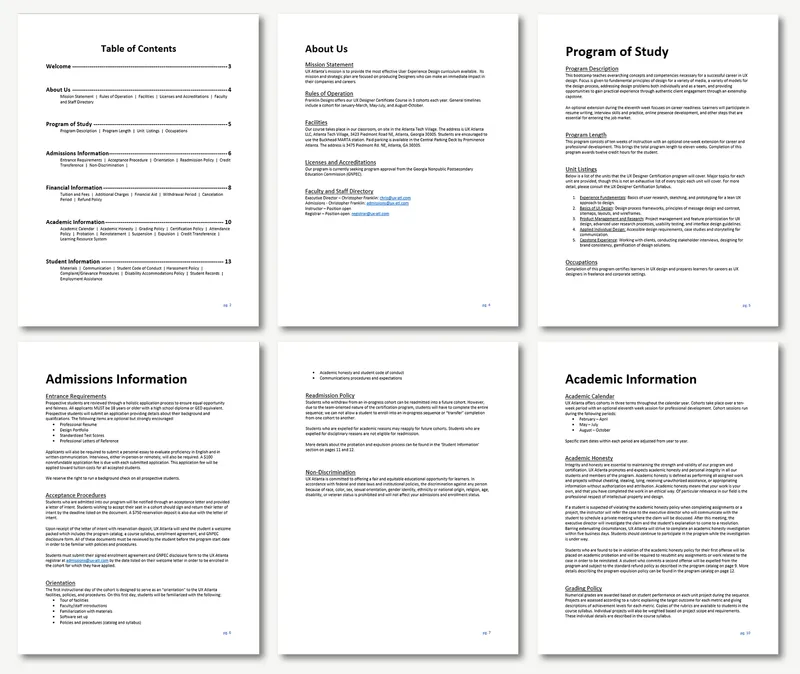
Select pages from the institution’s catalog/handbook detailing policies and procedures